
The Phoenix Award is a part of Haifa Award’s International Program organized by IDAR-Jerusalem. It aims at tackling spaces of “Risk” throughout the world in an attempt to evoke innovative interventions and potential reconstruction possibilities. This year the topic was the tragic blast that hit Beirut and its fatal effect on its seaport and life spine.
2021 Awards cycle's participation included 13 entries from all around the world. Of which the Palestinian collaboration "M.A.D Architects" consisting of Majd Malki, Ala’a Abu Awad, Mais Bani Odeh, and Diala Andonia have won the first prize for their project entitled “The Aftermath - A Productive Beirut”.
جائزة Pheonix-2021 هي جزء من برنامج جائزة حيفا الدولي الذي تنظمه مؤسسة IDAR-Jerusalem ، والتي تهدف إلى معالجة مساحات "المخاطر" في مناطق مختلفة من العالم كمحاولة لاستحضار تدخلات معمارية وحضرية مبتكرة لبحث إمكانيات إعادة إعمار هذه المناطق المنكوبة. تطرق موضوع المسابقة لهذا العام إلى الانفجار المأساوي الذي ضرب مدينة بيروت وأثره المدمر على مينائها البحري وفضاءها العام. فقد شارك بالمسابقة عدة فرق من دول مختلفة على الصعيد العالمي، وتأهل للمسابقة 13 مشروعاً حاز فيهم مشروع الفريق الفلسطيني M.A.D Architects على المنصب الأول بعنوان "ما بعد الانفجار- بيروت المنتجة"، الممثل بأعضائه: الآء ابو عوض، مجد المالكي، ديالا اندونيا، وميس بني عودة.
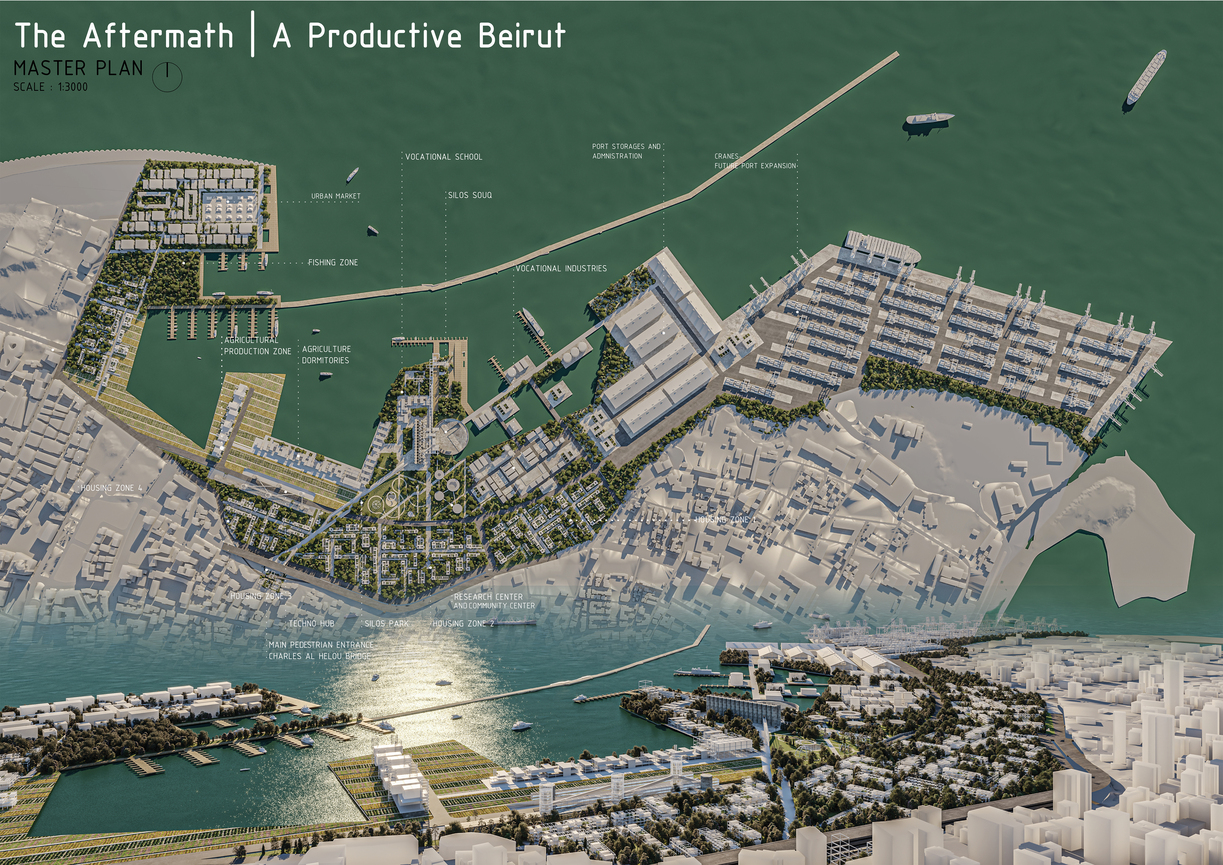
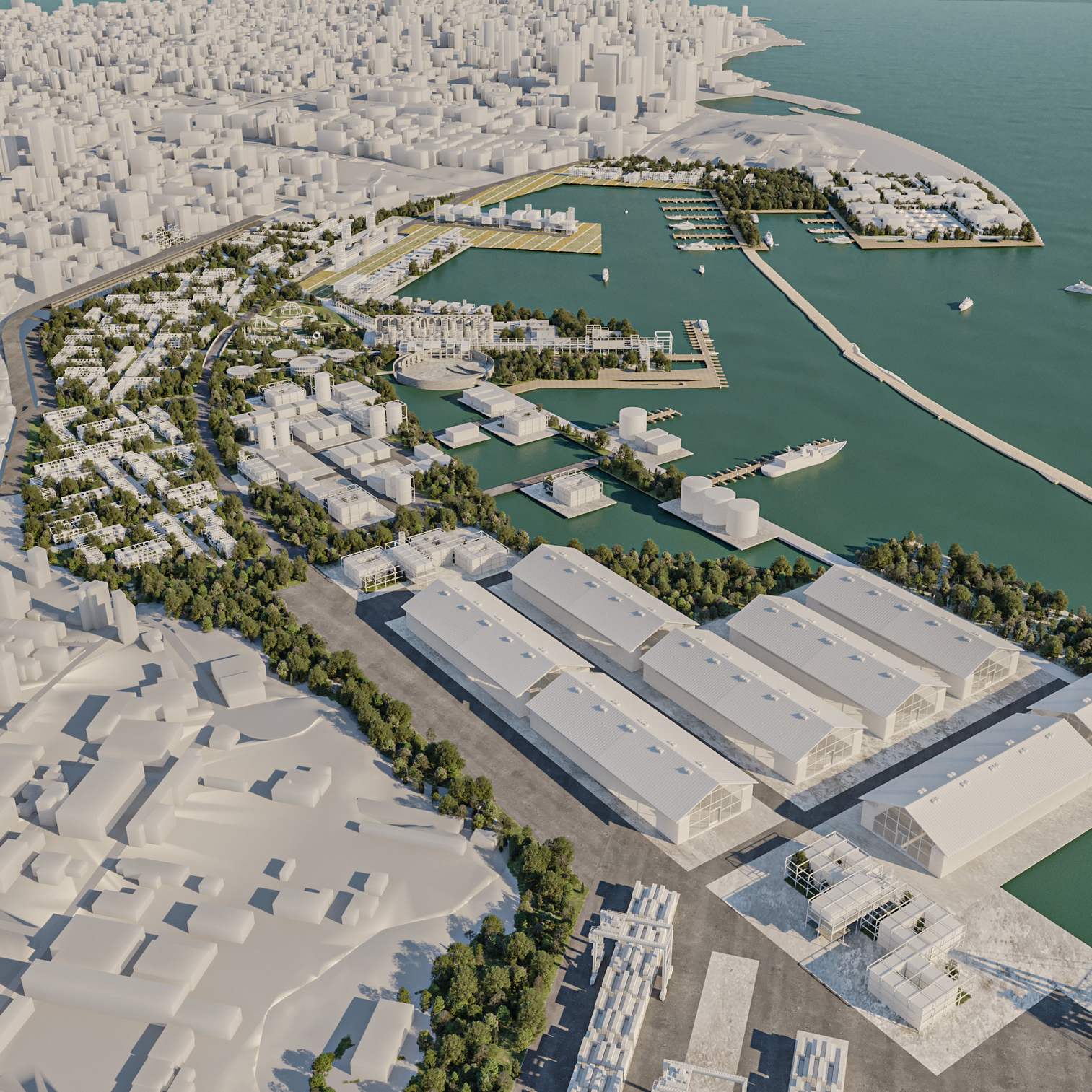
The project aims at creating a loop of production of material and knowledge that is built upon the remnants of the explosion to stand as a constant daily reminder of what once happened. This loop will be established throughout the process of creating a self-sustaining system with the knowledge and the materials as its inputs. First the knowledge and the know-how of the community becomes part of the construction of the city opening up new opportunities and creating future jobs. This Combined with the reuse of the materials that were left by the blast can close the sustainable loop and attempt to strengthen the local economy.
The project addresses five different key aspects that were considered crucial in the recreating of the city of Beirut. The first is an attempt towards triggering A new local economy driven by the local people with their local passion through offering creative spaces of workshops, production spaces, vocational and agricultural schools and others. The intervention that can tackle the already high employment rate that was exacerbated by the blast through creating a platform of potentials capable of inducing jobs.
فاقم حدث انفجار المرفأ الأزمة القائمة في بيروت والحالة الهشة في لبنان بشكل عام، حيث شهدت المدينة زيادة ملحوظة بنسبة البطالة ونقص الغذاء والمسكن وغيرها من الأمور العديدة التي توثر على دورة حياة مواطنيها اليومية. يهدف مشروعنا المقترح إلى إعادة بناء المدينة من خلال خلق حلقة من الانتاج المعرفي والمادي مستندة على بقايا الانفجار لتكون بمثابة تذكار يومي ودائم يوثق ما حدث. هذه الحلقة تعمل ضمن نظام ذاتي مستدام ينتج باستمرارية خلال فترة اعادة بناء المدينة، مرتكزاً على انتاج المواد والمعرفة المهنية المكتسبة كمدخلات أساسية في تشغيل هذه الدورة. فبالتالي تصبح المعرفة المجتمعية المهنية ركناً أساسيا للمدينة تخلق فرص عمل وإبداع جديدة مبنية على اعادة استخدام المواد الإنشائية التي خلفها الانفجار بحيث تعتمد على المعرفة المحلية لتضمن استمرارية هذه الحلقة وتعزيز الاقتصاد المحلي.
يطرح المشروع خمسة جوانب رئيسية تعتبر حاسمة في إعادة بناء المدينة. الجانب الأول الذي يعرضه المشروع هو خلق منظومة اقتصاد محلي جديدة مشغلها السكان المحليين، بحيث تعتمد هذه المنظومة بشكل أساسي على نظام التعليم المهني، وذلك من خلال توفير مساحات وفراغات تضم ورش عمل ومصانع انتاجية ومدارس مهنية وزراعية وغيرها من الفضاءات المنتجة لتساهم في حل أزمة البطالة واستمرارية العمل.
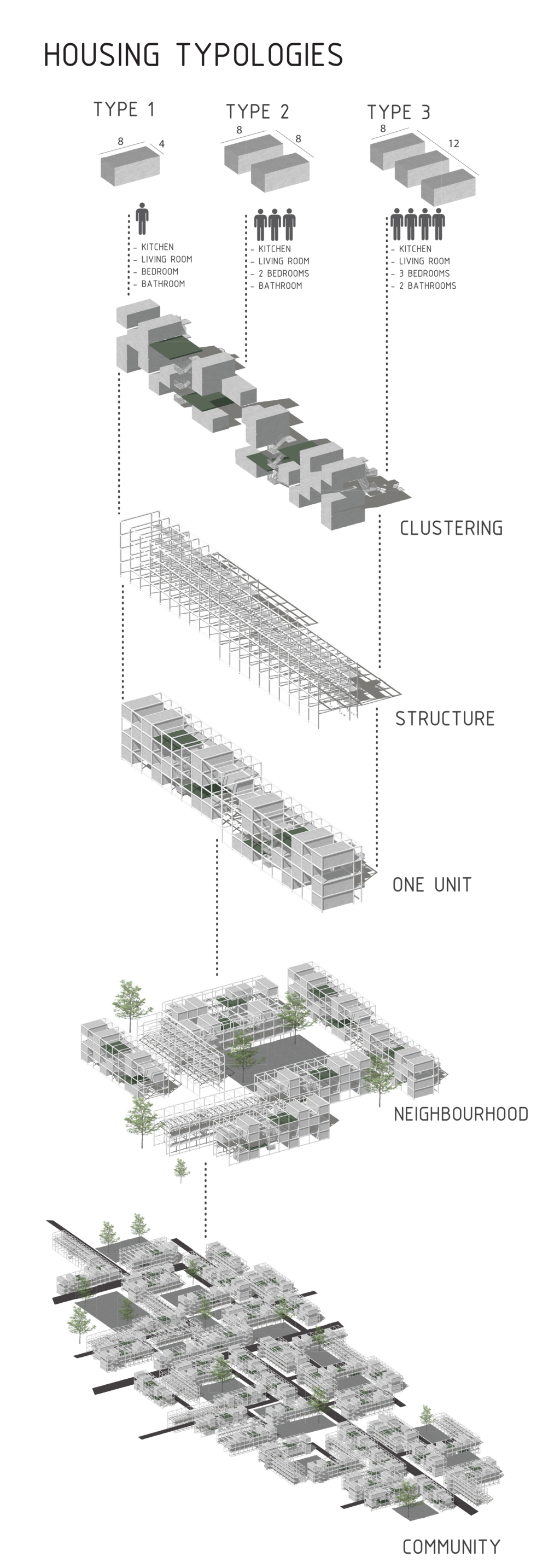
The second key aspect is the urgent need for quick temporal housing of almost 300,000 residents that lost their homes in which was addressed through creating housing typologies that can quickly and temporarily house residence affected by the blast, these temporary structures are very adaptable and can change in the future to become different types of housing or working spaces.
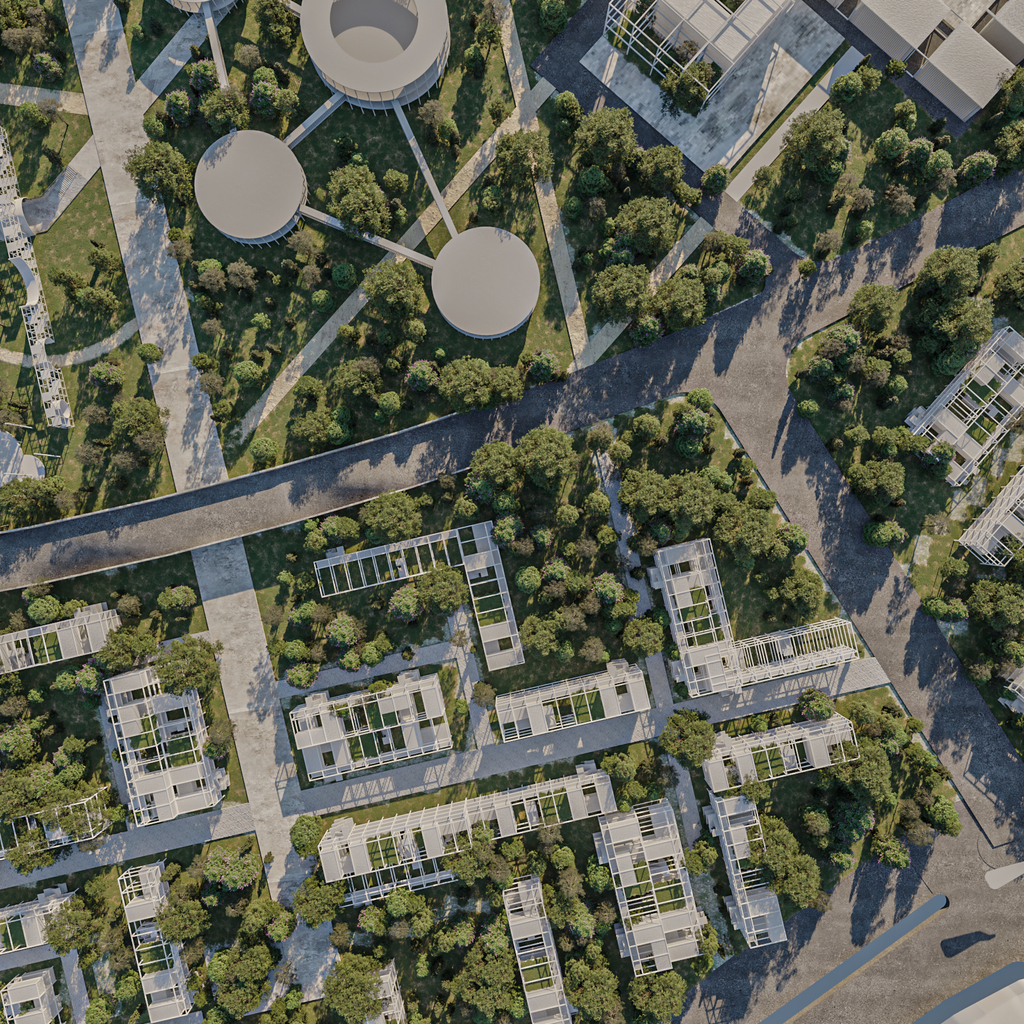
The third is The people’s right to the city through resisting privatization and creating permeable public space that harbor all sorts of social activities to increase social bonding and unity whether in the form of open public spaces, local markets, or spaces built by the public.
الجانب الثاني ويتمحور حول الحاجة الملحة لسكن مؤقت سريع الإنشاء لاحتواء ما يقارب 300,000 متضرر فقدوا منازلهم بالانفجار، حيث يطرح المشروع فكرة انتاج نموذج سكني يتم انشائه بطريقة عملية وسريعة تضمن حل الأزمة الإنسانية بأسرع طريقة ممكنة. ويرتكز تصميم هذا النموذج على كونه قادرا على التكيف على المتغيرات المستقبلية ليشكل أنماط وأنواع مختلفة من المساكن او أماكن العمل. الجانب الثالث هو حق المواطن بمدينته ويتحقق من خلال مطالبته بمقاومة الخصخصة وخلق مساحات عامة تأوي جميع أنواع الأنشطة الاجتماعية وتهدف الى زيادة الترابط والوحدة المجتمعية سواء على شكل مساحات عامة مفتوحة أو أسواق محلية أو فراغات ينتجها سكان المدينة المحليين. والجانب الرابع فيتطرق إلى مخلفات الانفجار ويسلط الضوء على جميع المبادرات الموجهة لإعادة استخدام المواد مثل الحديد والخشب والزجاج التي تناثرت بشكل كبير في جميع أنحاء المدينة جراء الانفجار. فيهدف مشروعنا إلى إعادة استخدام هذه المواد في عملية إعادة الإعمار وربطها مع مدارس التعليم المهني والمساحات الإنتاجية الصناعية التي يمكن أن تساعد في خلق معرفة جديدة تدعم في تحقيق الهدف.
The Third key aspect is the remnants of the blast and highlighting all types of initiatives channeled towards reusing materials such as steel, wood and glass that were largely scattered throughout the city. The project aims at reusing these materials to aid in the reconstruction process by offering vocational education and production spaces that can aid in creating a new knowledge and creating new jobs for the residents.
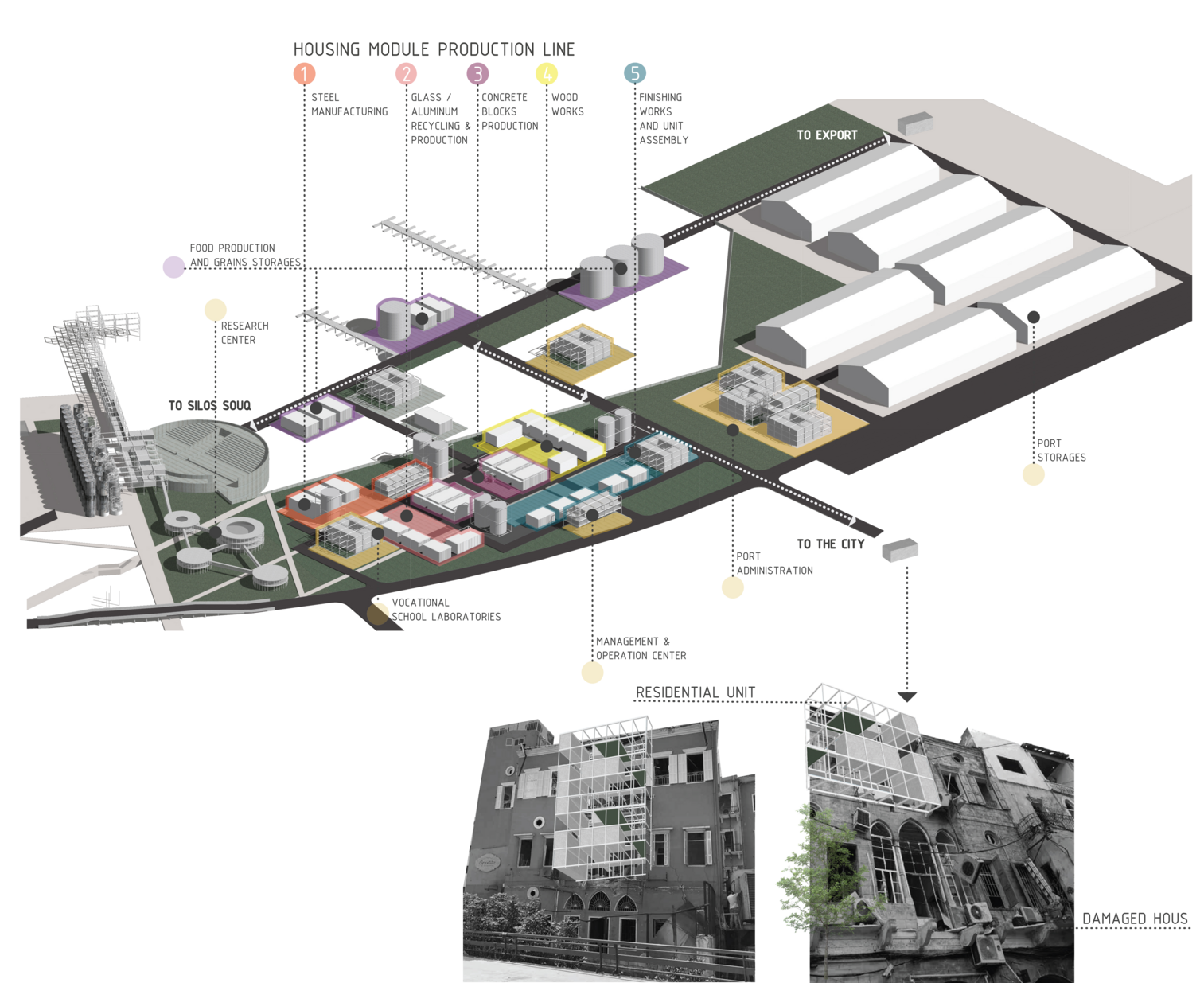
الجانب الرابع ويتطرق إلى مخلفات الانفجار ويسلط الضوء على جميع المبادرات الموجهة لإعادة استخدام المواد مثل الحديد والخشب والزجاج التي تناثرت بشكل كبير في جميع أنحاء المدينة جراء الانفجار. فيهدف مشروعنا إلى إعادة استخدام هذه المواد في عملية إعادة الإعمار وربطها مع مدارس التعليم المهني والمساحات الإنتاجية الصناعية التي يمكن أن تساعد في خلق معرفة جديدة تدعم في تحقيق الهدف.
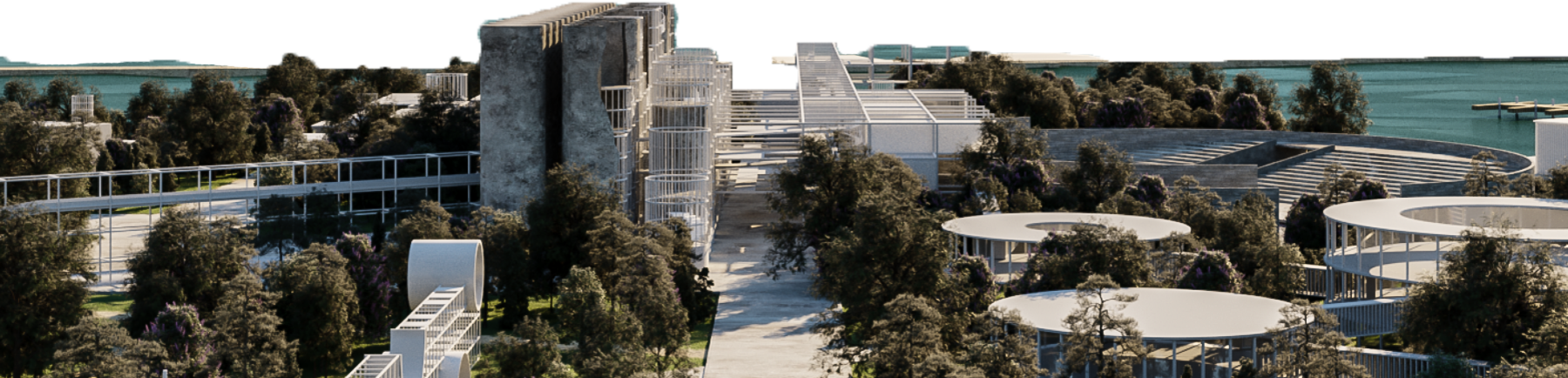
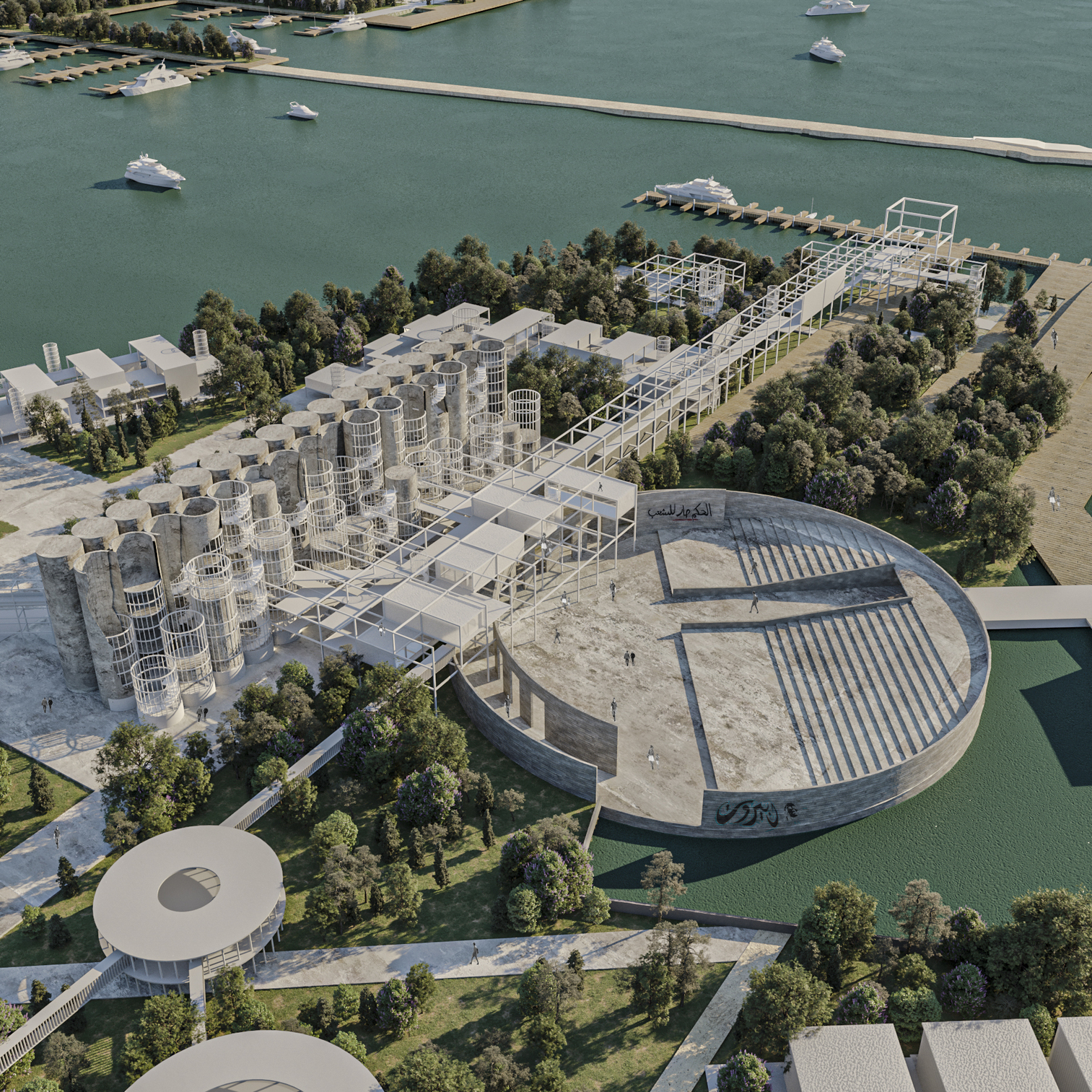
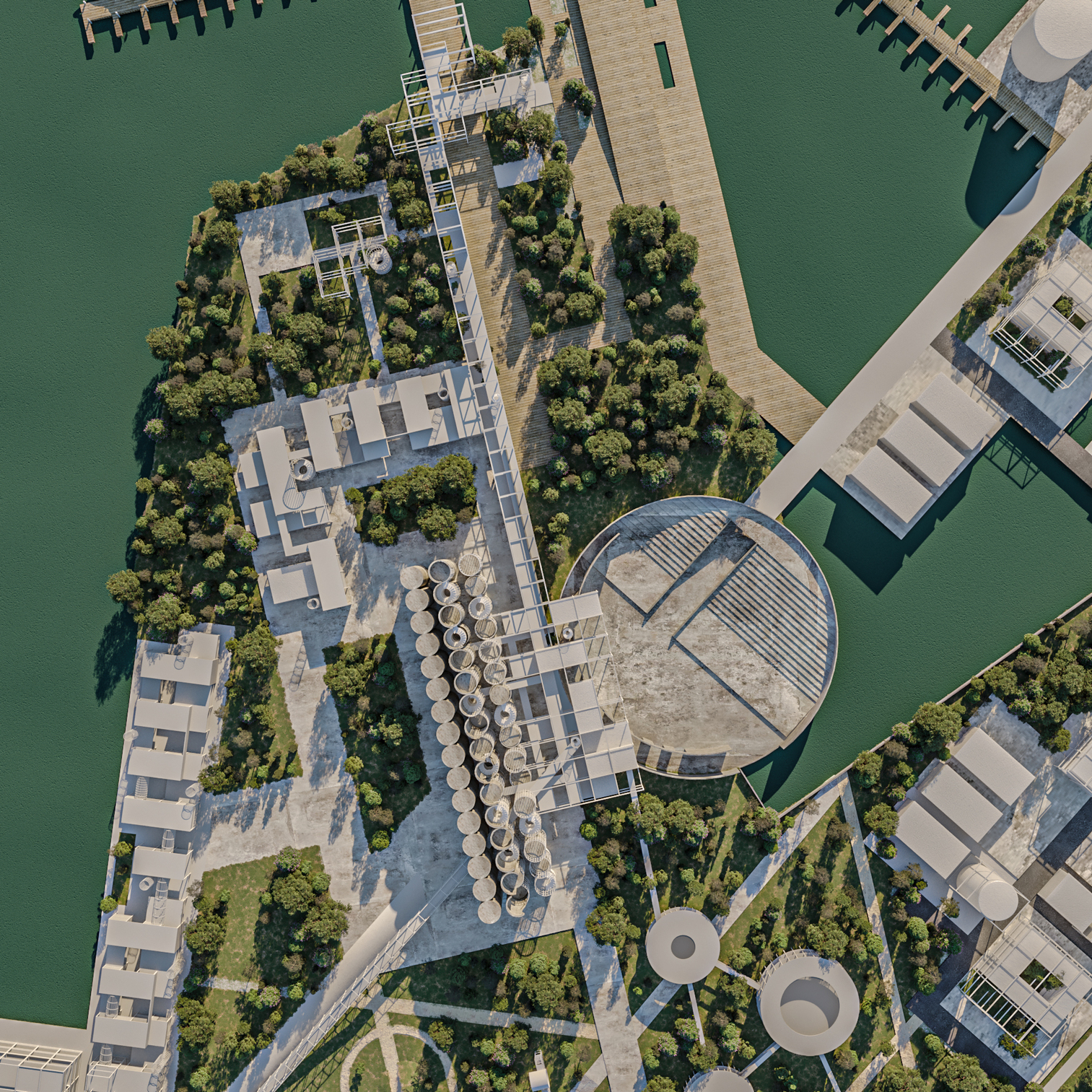
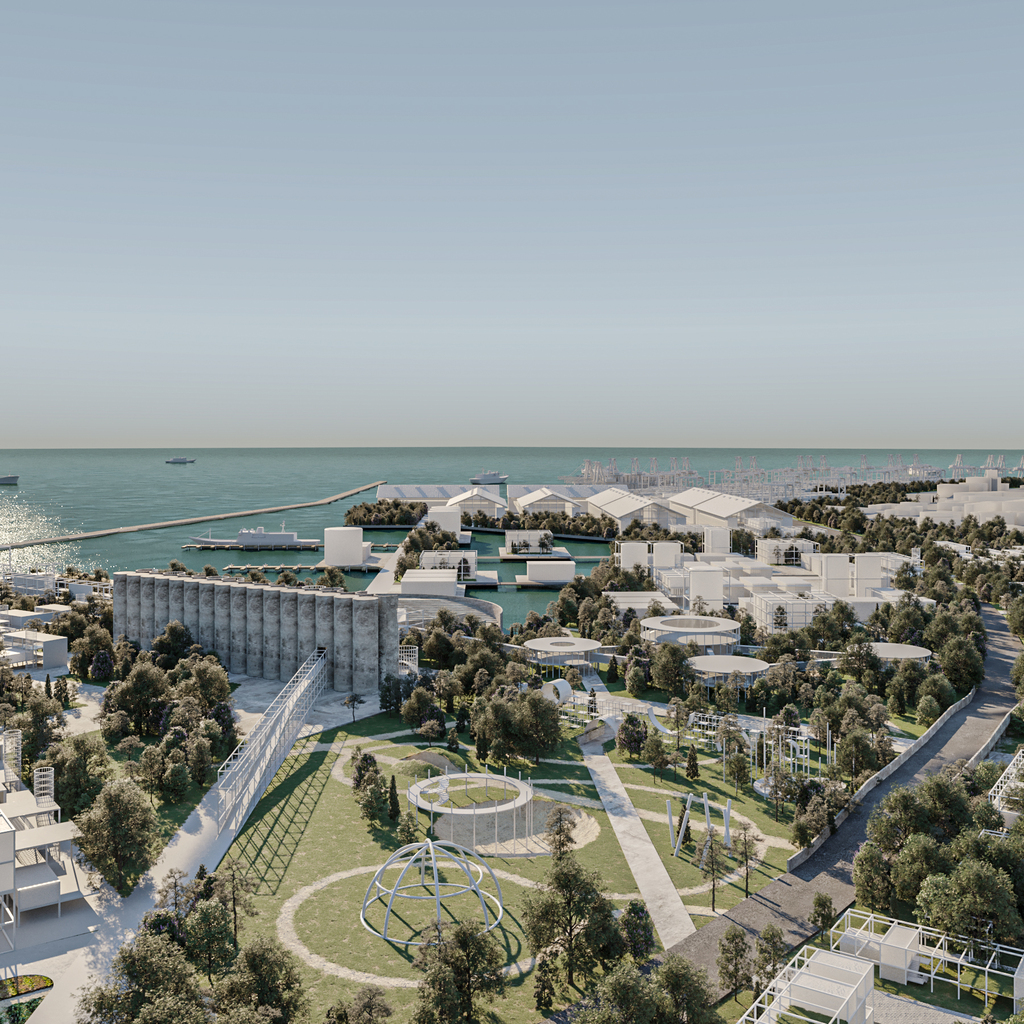
The last aspect is The memory of the blast, The Silos, which are barely holding up, are an important part of the collective memory of the city residents and are witness to the events that took place. The project focuses on preserving the collective memory embodied in the silos and the blast zone; through sensitively integrating everyday activities that embrace the cruel harsh memories of the place as a constant reminder of the city’s scars and the beloved ones lost in the incident. The project sets the blast zone and silos as a focal point in the city by reinforcing the silos using a structure that functions as part of the public space and local market (Silos’ Souq) and by creating a large auditorium to house different functions and activities in blast center, making the memory of the blast as part of the everyday life of the citizens.
أما الجانب الاخير والأهم يتمحور حول أهمية وجود الصوامع المتضررة والتي أصبحت جزءاً لا يتجزأ من الذاكرة الجماعية لسكان المدينة، فهي تمثل الشاهد الحقيقي والثابت على الأحداث المريرة التي وقعت ببيروت. فيرتكز مشروعنا على حفظ وتخليد هذه الذاكرة الجماعية المتجسدة في الصوامع ومنطقة الانفجار، وذلك من خلال الدمج المدروس للأنشطة اليومية مع الذكريات القاسية في المكان كتذكير دائم بندوب المدينة والأحباء الذين فقدوا في هذا الحادث. فبالتالي تم تحديد منطقة الانفجار والصوامع كنقطة محورية ومركزية للمدينة الجديدة من خلال تعزيز وتدعيم الصوامع بهيكل وظيفي وانشائي يعمل كجزء من الفضاء العام والسوق المحلي (سوق الصوامع)، بالإضافة إلى إنشاء مدرج كبير يحوي وظائف وأنشطة مختلفة تقف على مركز الانفجار، مما يجعل حقيقة ذكرى الانفجار جزءًا من الحياة اليومية للمواطنين.